Thursday, September 11, 2014

How Low Can You Go?

With the NZ elections coming up, all political leaders have lots of airtime on radio, TV and online. Politicians have to be careful about every word they say – anything can be used against them. But they also have to be effective in how they say it. Nonverbal communication (body language and tone of voice) has major influence on how people will perceive you and your message. Us humans constantly scan the nonverbal messaging of others to search for clues that tell us if this person is trustworthy, genuine, an authority, can perform under pressure etc. 

This scanning for nonverbal clues is done on a subconscious level. Especially when it comes to the tone of voice, we make decisions about a persons intellect, credibility and personality without really consciously considering it. For instance the pitch of your voice has immense effect on how others perceive you. A high pitched voice is associated with nervousness and childishness, as a low pitched voice is often associated with credibility, maturity and authority.

Do you want proof? Well, in 2011 research has been done by Klofstad, Anderson and Peters on voting patterns of people when they listen to high and low pitched voices. They engineered non-recognizable voices (both male and female) saying “I urge you to vote for me this November” and then modified the sound so that they had versions in both a high and a low pitch. The researchers then asked students and adults (male and female) to vote to see if their voting preference for the fictitious candidates differed on voice pitch alone. Lower-pitched male and female voices each earned roughly 20 percent more votes than higher-pitched voices. Obviously, these voting patterns will be particularly applicable to the unknowledgeable voter.

No wonder politicians like former British prime-minister, Margaret Thatcher and former US president, George H. W. Bush, had voice coaching to lower their speaking voice.


If you want to lower the pitch of your voice and enhance credibility and authority, here are a few tips:

-       Breathe in calm and low before you speak; breathe towards your diaphragm.

-    Relax your forehead while you are speaking - seriously, your pitch rises automatically when you raise your eyebrows.

-    Relax your body and anchor yourself to the ground or your chair.

-       Say the following sentence and every time you repeat it, try and lower your pitch slightly, not losing the resonance in your voice. Make sure you keep your jaw nice and loose.
                       “mmmm-one-mmmm-two-mmmm-three-mmmmm-four”

-       Say your name and your job title a few times in a row, each time making sure you have lots of modulation throughout your sentence and checking if the lower pitched parts are still in your powerful vocal range.                                                             “My name is…. and I am a ….”


It may feel a bit weird at first to do these exercises, but if you do them every day for a month, your voice will go down in pitch and will become richer in tone.   

Tuesday, August 26, 2014

Amplify your Authority by changing the Way you Move


When somebody walks on to a stage, you don't want somebody aimlessly wandering, not acknowledging the audience, with no clear direction in where he or she is going. You would immediately judge him or her – not a first class act, not self confident or not committed to the job.

The same principle is at play when you make an entrance at a job interview or even a meeting.

So, how can you make sure others perceive you as someone competent, confident and committed? Give every movement a clear and purposeful direction.

On stage, actors often use the Laban movement chart to  refine their physical expression. Laban breaks down how we move into three different areas: space, weight and time. Space can be either direct or indirect, weight can be either heavy or light and time can be either sudden or sustained.

When, as an actor, you are playing a certain character, the different combinations of the three areas (your Laban cocktail) help you to physically portray  your character convincingly; a young frivolous character would have indirect, light and sudden movements, where as an aggressive character would have direct, strong and sudden movements.

So how would this apply to people working in the corporate sector? Remember, up to 80% of our communication is conveyed by the nonverbal signals we send out. If you want to come across as somebody with authority and someone who’s trustworthy, your nonverbal messaging has to match this. Using indirect, strong and sudden movements would send out the signal that you are impulsive and a bit nervous. Those movements certainly wouldn't match the authority and trustworthiness you want to express. A better combination would be to use direct, strong and sustained movements.

A direct, strong and sustained way of moving sends the message that you are energetic, yet focused and in control;  strong but not rigid;  directive – but in a calm way. In other words, all the qualities you want to express as a leader. Add a few sudden, direct and strong movements into the mix and you can amplify your assertiveness. Make a direct, sustained but light movement and you might show more of your analytical side.

To choose which ingredients in the Laban cocktail you need to make a stronger impression in those first seven seconds, you first need to know your habit.

You could call your way you move through space, your movement fingerprint. Once you have analysed your 'fingerprint', you get a clear idea of which Laban cocktail you normally use and what message you send out with this way of moving. Then, ask yourself: what do I want to express, what would the ideal cocktail be? With this awareness you can make focused decisions about what movements you want to keep, what needs to change and what would be your most effective Laban cocktail. After this, the fun part starts: practice!

You can practice this anywhere; while brushing your teeth, cooking a meal, waiting for the bus, ordering a drink, on the dance floor and obviously during interaction with others. So how would you practice direct, strong and sustained movements? Imagine you are moving and gesturing through treacle or water; it takes a bit more effort, your whole body has to be involved and all movements are made with purpose.


And remember - have fun with it!

Thursday, August 14, 2014

Use your Voice to give Meaning to the Words

Words mean more than what is set down on paper, it take the human voice to infuse them with deeper meaning.
- Maya Angelou

 
Are you expressing the meaning of your words with your voice? When we listen to someone's voice, we aren't just listening to words, but also for clues about how a person feels or wants us to feel. A shrill and fast paced voice sends out different signals then a resonating and slow paced voice. You all know which one you prefer. Because both imply an underlying emotion.  

And it doesn't stop with listening. We automatically change how we sound by tweaking our pitch and "infusing" our voice, as Maya Angelou said, with emotion. To give you an example: just think back to when you've held a baby in your arms - the sound of your voice changed! 
Even the toughest bloke will change the sound of his voice; put more modulation in.

So it is fair to say that by changing different elements in our speaking voice, we can, as Maya Angelou also says, give deeper meaning to words that are set down on paper.

These elements are:
·        Pace
·         Pitch
·         Modulation
·         Articulation
·         Sound

Once you start listening how others use these ingredients in their speech, you can become aware why someone's voice is not as effective as it could be. 

While at it, give yourself a task as well! Re-record your voicemail message. Practice it a few times first, asking yourself: 
·         Is my name clearly pronounced?
·         Am I using a downward inflection when I state my name? - otherwise it sounds like you are asking somebody else if what your name is: "my name is Dorothy Watts?" 
·         Am I keeping a nice relaxed pace with enough modulation?
·         Does my voice sound welcoming and confident? - a rich and low tone

Record it, trying it out a few times until you are happy with your message.

One tip that will improve your sound instantly: smile when you record your message - it will make the quality of your voice sound richer. 


Happy Voicing!

Wednesday, July 23, 2014

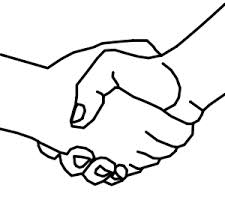
The Handshake


handshake blog.jpg

You only have 7 seconds to make a good first impression.That's it. And even though it may feel like you have no control over how others judge you in this short space of time, there really is a lot you can do to make sure you radiate your best and true self.

We talk a lot about nonverbal communication. It can help you to make that first impression great - so let’s start with tactile communication: aka the handshake.

We don't communicate through touch very often in our professional interactions; entering someone's private space is something that makes people uncomfortable and it could be misinterpreted. Here in New Zealand (other cultural contexts change the rules), usually the only moment that we touch each other during a conversation is during that good ol’ handshake. So let’s zoom in on it a bit.

How many people dread the limp hand or wince when someone squashes your hand as if it needs to be ‘dominated’?

Think of the handshake like this: your hand is like your business card. But with the added complication that four senses come into play when you reach out and shake someone’s hand.

The other person looks at how you approach him or her, listens to what you say when you shake hands, and clearly feels something (strength/weakness etc.)  Even their spacial awareness is switched on....getting nervous already?

Don’t be. You can master the art of the handshake by learning the 4 key elements :

Visual:

• Make sure you make eye contact before you extend your hand for the shake

• Keep eye contact during the shake

• Look away after the shake is finished (otherwise you will come across as threatening)

• Make a clear extension of your arm when you shake

• Both shoulders need to be facing the other other person

• Lean in slightly toward the other person

• Have a pleasant and relaxed smile on your face and relaxed forehead

Auditory:

• Say the name of the person you are greeting in your welcome statement

• If you introduce yourself, make sure your name is clearly stated with a downward inflection at the end

• Keep the pitch of your voice low (for that “commanding” presence)

• Make sure the volume of your voice is suited to the distance and other noises around (surely you can remember cringing when somebody “boomed” at you in a crowded setting - or straining to hear someone who spoke too softly)

• Clearly articulate - no mumbling!

• It always implies a bit of added authority when you say a bit more than just: “Hi, how are you?” - have a few extra greeting lines ready

Tactile:

• Use a firm grip when holding somebody else's hand - not too forceful, not too loose -  how you would check an avocado for ripeness :-)

• Keep your fingers together; don't spread them over the other person’s hand

• When you shake the other person’s hand, try not to be too forceful and shake from your elbow. Avoid having a stiff arm that shakes from shoulder down...

• Use your senses to know when to break contact. We all know how uncomfortable it can
be when somebody holds contact too long, but a lot of people retreat too quickly from a
handshake. If you want to express authority, hold the other's hand two seconds longer than
you normally would, without retreating and all the while keeping eye contact

• Depending on the situation, you could incorporate your other hand: one hand shakes, while the other covers the hand or holds the shoulder. When you do this, you are really establishing your authority (This is what the father like figure or your boss would do and of course, this is where you enter the game of power-play that politicians seem to enjoy)

• Obviously, make sure your palm of your hand is not sweaty or wet

Proxemic:

personal distance.jpg

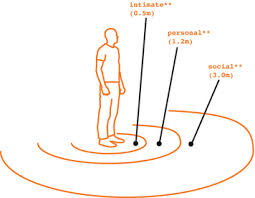
• When we shake somebody's hand it is very important to realise that we are close to entering somebody's intimate space (0.5m). That's why it’s significant - it implies a greater intimacy and trust. Try, however, to honour the other's intimate space and stay in a 0.5m - 1.2m range of him or her

• The closer your feet are to the other (entering this intimate space) the more uncomfortable
it becomes. Instead, you can lean in slightly to give the impression that you are committed to talking to the other person, which lessens the tension

• Obviously, if you know the other person well, these distances can change, and same again with the game of power-play. How many times do you see a politician pulling the opponent in (toward the politician) while he or she shakes the other person’s hand?

Some believe the handshake evolved from ancient times as a way to show you mean peace: approaching someone and extending a hand that held no weapon. (Hmmm….still makes you think about the way politicians do it, though, doesn’t it?)

It's a lot to think about. But don't just think - practice! Enlist the help of a partner or friend and make a fun night of it: you might even try out the worst and best handshakes on each other!

Want more ideas? You can find plenty of inspiration on YouTube.

Have fun!

Monday, June 23, 2014


How to Wow in 7 Seconds Flat


We’ve been told not to judge a book by its cover, but it seems we just can’t help ourselves. In fact, we’re wired to do just that. 

Can’t we all admit to having a bad first impression from someone - that stuck? That means it’s probably happened to us, too!

It could have been at a cocktail party or a job interview.

A New York University study found that we sift through available information within just seconds of meeting someone and make an on-the-spot evaluation of a mind-boggling range of really important things like their trustworthiness, ability, values and credibility. 

For good or bad, changing that first impression takes time and effort. Time and effort that many of us, especially potential employers, aren’t typically willing to invest.  
So, how to make a great first impression? 

Maybe we should start with how not to…

How many of us can point to examples of  job interviews that went wrong?
We probably can picture the person who shows up so over-confident that the interviewer can’t wait to close the door behind him. Or when the image of a pulled-together candidate crumbles when she walks through the door five minutes late and flustered. 

The jobs likely went to someone whose appearance and performance actually matched the impression that their CV or phone conversations made before the face to face interview - prepared and professional.

Much as you might not like it, grooming standards are top of the list when it comes to hitting your mark in that first 7 seconds.

We recently worked with a high-level executive who kept shoe polish in his office for his less-detail-oriented team members - to make sure they came across as "polished" in their pitches.

But it isn’t just how you dress. What other non-verbal cues can work for or against you? 

Picture a warm smile, a friendly open demeanour, a good handshake, steady eye contact, strong posture, and body language… 

These non-verbal behaviours aren’t just visual - they tap into our value systems and lead us to form judgments on both a conscious and unconscious level.

And by the way, when someone makes a snap judgement of you, it often shows. Have you ever picked up on unimpressed glances from a cocktail party acquaintance to an interviewer and known you’d already been crossed off the list before you could even open your mouth?

When that happens, your self-confidence can disintegrate fast.

Another little nugget you might not have considered: the power of the non-verbal cues works both ways - impacting how others see you as well as your own sense of self-assurance. No one explains this better than Amy Cuddy, in her Power Pose TED talk and her research into the importance of posture to self-esteem and feelings of power. 

Not yet convinced of the pay off? Well, consider this: being aware how non-verbal cues literally trigger responses in our brain can even give you a measurable financial advantage in your quest for success. 

A study done in 2000, by Robert Baron and Gideon Markman, “Beyond Social Capital: how social skills can enhance entrepreneurs success” suggests that the nature of an entrepreneur’s face-to-face interaction strongly influences her success. Study results showed that the way entrepreneurs were able to read others, make favourable first impressions and adapt to a wide range of social situations influenced their access to what many would say is ambrosia for business: venture capital.
So, rather than fight human nature, as we often say at Personal Branz, use your understanding of it instead - to put you one step ahead. Decide how you want to be perceived and take the step to makes sure you radiate this in every interpersonal connection.


Thursday, May 29, 2014

Mind the Confidence Gap

Can you remember a time in your life when you felt totally insecure? How exactly? Did you break into a cold sweat, or feel hot and uncomfortable, or even had the sensation that the ground beneath you might just crumble ?


Or maybe it's something you felt a little more deeply - at an emotional level - like you had no life compass or low self worth?


This can happen if you’re up for a job promotion, meeting new friends, standing in front of an audience or every day around the meeting table at work. And the effect can be crippling. 

Doubting our abilities can stop us in our tracks. We can all probably pinpoint a time when we've given up on something, out of fear - before we’ve even had a go.

While this can happen to men and women, a recent publication by co-authors Katty Kay and Claire Shipman, “The Confidence Gap: The Science and Art of Self-Assurance – What Women Should Know” shows the bulk of research confirms confidence struggles are far more prevalent and debilitating for women, especially when it comes to their careers.


A chronic lack of confidence among women leads them continually to underestimate their abilities, fail to put themselves forward for promotion, and predict they won’t perform well when faced with challenges - far more so than their male counterparts.


In a recent article in The Atlantic and in an interview with Kim Hill on Radio New Zealand National, Shipman notes women are not good at assessing their self-ability, most often underestimating their competency.


It is a basic problem, says Shipman, but with profound consequences.


In one example, a study by Hewlett-Packard found women only considered going for that promotion when they were 100% confident they fulfilled all job requirements. Men were happy to apply with only 60% of the requirements fulfilled.


Even the expected income of graduate students differed, with women expecting on average 20% less pay than their male counterparts. A 2003 study by psychologists Dunning and Ehrlinger concluded men overestimate their abilities and performance, while women underestimate both.


Why is this important?


Kay and Shipman argue it's critical because confidence translates into action.


Cameron Anderson, a psychologist in the business school at the University of California, studies overconfidence. His conclusion? Confidence “matters just as much as competence”.


“When people are confident, when they think they are good at something, regardless of how good they actually are, they display a lot of confident verbal and non-verbal behavior,” he says in The Atlantic.


Another critical piece of research: tests performed by Milan research psychologist, Zachary Estes, show women performed more poorly than men during the study mainly because they didn’t even attempt many questions. When Estes made it compulsory to complete every question, the performance was actually equal.


“What held them [women] back in this study, “ says Kay and Shipman. “was the choice they made not to try.”


So where does lack of confidence, even among high achieving women, start? And can it be stopped?


Studies outlining both nature and nurture highlight the breadth of theories which may explain this mindset among women.


From science to schooling to perfectionism.


Science actually shows a genetic component that regulates the chemicals and hormones in your body, contributing to confidence or a lack thereof. Neurotransmitters like serotonin and dopamine can make or break your chance of feeling confident. While those can vary in men and women alike, there’s no arguing testosterone leads to greater risk-taking - a critical component of confidence. There’s even a “worrywart” centre that’s been identified in women’s brains. Yes - now you can blame science for that habit!


Schooling is another area in that impacts confidence in and it can be traced to the differences between how girls and boys learn. Girls excel at school - they are rewarded for typically being good, working hard, and fulfilling the requirements of testing. In other words, being perfect.


Studies show boys, on the other hand, were more prone to criticism from teachers and friends, which actually had a positive effect: it helped build resilience. Boys also played more sport, learning to enjoy winning and how to bounce back from failure.  In general, researchers have found that boys tend to explain poor results by externalizing - “it was a tough test”, as opposed to the internalizing that girls do, thinking, “I didn’t work hard enough”.


Women also seem prone to perfectionism. And this is critical...


Perfectionism can be positive: think high standards, pursuing excellence, and working hard to achieve these.


But striving to be perfect also has a dark side: it makes us risk averse. Perfectionism does not allow us to embrace life’s inevitable failures as important learning and growth experiences. Instead, through our picture-perfect lens, we see failure only as something awful that crushes our self-worth.


Oh...and it is insatiable. How many times have you achieved something only to brush it aside, saying, “Ah yes, but it was only ….”?


Are you sick of it yet? Want to be a little stronger, braver, willing to try - without being 100% confident of winning or losing?


Kay and Shipman and a host of other experts point to a few steps.


50,000 people have taken their Confidence Quiz since it launched online. It’s quick and helps with the ongoing research. The quiz ranks your level of confidence and then offers suggestions and solutions for whatever is stopping you from being your most confident.


And by the way, that is why we are in business. Personal Branz exists help people become aware of their unique combination of strengths and passions passions, and align them with their training, skills and goals - providing what we call a “source of strength”. 

A Personal Brand can bridge the Confidence Gap and ground you when your sense of self worth is badly shaken.  

Working with our clients, we see confidence revived and revealed as they work their way through the Personal Brand process. For some it’s provided a foundation to build their future - for the first time ever. For others, it’s provided the foundation for rebuilding, and resilience, after going through a life-changing experience like restructuring.


For everyone, the first step is awareness. The next step? Action.


You can change the way you think. And then you can change the way you act. And then you can change your life. Cultivate confidence and create your future - it’s your choice.


Tuesday, March 11, 2014

Resiliency


We’ve come up with something new at Personal Branz - something fun, functional and (if you stretch the point) even fashionable. It's a Personal Branz band, which we're now calling our "Resiliency Rater". 

Okay, so it’s a fancy name for a simple rubber band. But it's one that you can not only use at your desk, but also wear like a bracelet! So we think making it sound a bit "fancy" is entirely apropos.

We are using our new bands in a talk we've just put together on Resiliency, which is generally defined as the ability to bounce back. Rubber bands just seemed like a natural teaching tool, which is what prompted us to design our own. Then we needed to find someone to manufacture them.

We ordered our Personal Branz bands from a manufacturer, based right here in Wellington...and we ended up getting a lesson on resiliency in the process!

The owner of the business is Brian Waugh. His company, Waugh Rubber Bands, is based in a warehouse in Tawa. It turns out both his product and his story are the embodiment of bouncing back.


Brian told us he didn’t set out to make his living manufacturing rubber bands, but jam jar covers - back when there were hundreds of thousands of people making their own preserves. But when grocery stores started popping up all over the country, making jams at home became a hobby, not a necessity. 

The jam jar cover business spiralled downward.

Instead of falling into a similar tailspin, Brian recognised he had a choice and found a way to adapt. Part of his jam jar cover business was cutting his own rubber bands. Brian did some research and discovered a shortage of rubber band suppliers in New Zealand. So he went into business cutting and supplying rubber bands and has never looked back. 


This is Brian:


And these are the Personal Branz Banz he made for us!


Right now Brian proudly tells us he is the only rubber band manufacturer in Australasia!

Faced with what could have been bankruptcy - or at least being forced to start from scratch - Brian reframed a setback and saw an opportunity. With a positive attitude and a realistic assessment of his options, he created his own success.

Resilience. The ability to bounce back. As one American politician, Alan K Simpson put it, "He is a million rubber bands in his resilience." We think that about says it...